

Books by Cedric de Leon
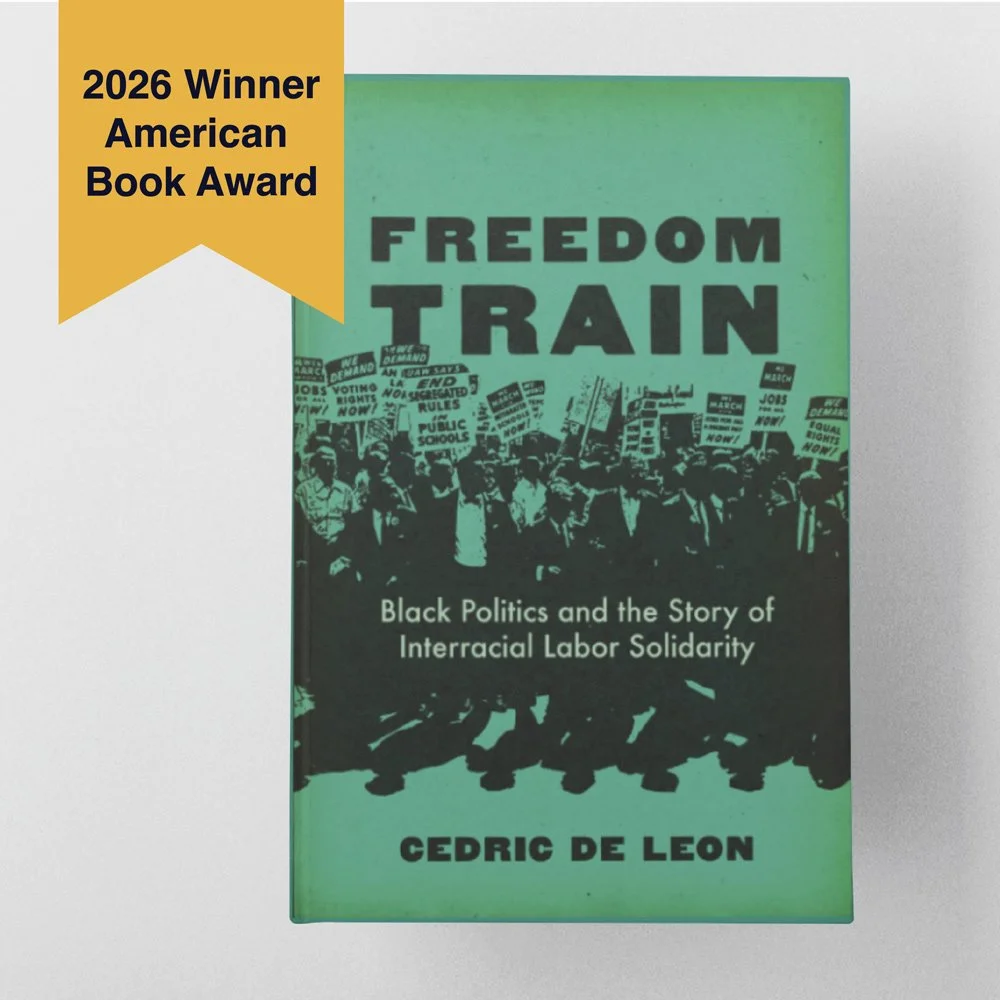
Freedom Train: Black Politics and the Story of Interracial Labor Solidarity
Most accounts of interracial solidarity focus on white union activists. In Freedom Train, Cedric de Leon, a former organizer and elected leader in the U.S. labor movement, argues that we can't comprehend the history of workers' triumphs in the United States without investigating the role of Black liberation. This book shows that, from the early twentieth century to the years immediately following the March on Washington and beyond, independent Black labor organizations have pushed the white labor movement toward a fierce and effective interracial solidarity.
Drawing on the minutes, correspondence, and speeches of Black labor activists and organizations from 1917 to 1968, de Leon reveals that Black people have been the most ardent and consistent proponents of racial inclusion, leadership representation, and programs linking economic and racial justice. He also demonstrates how conflict and consensus among Black labor groups fueled the fight for solidarity, as different factions split and consolidated to form successive and sometimes competing Black labor organizations. Freedom Train centers the contributions of Black people to the multiracial unions we have today and demonstrates that internal conflict can be a source of strategic innovation and social movement success.

Awards & Recognition
Winner, 2026 American Book Award
Finalist, 2026 Barrington Moore Book Award
Winner, 2025 Leo Panitch Book Prize
-

Crisis! When Political Parties Lose the Consent to Rule
A comparison of the coming of the U.S. Civil War and the election of Donald Trump.
-
Building Blocs: How Parties Organize Society
An edited volume on the ways in which political parties organize and disorganize society in their struggle for power.
-
The Origins of Right to Work
Tracing today's anti-union laws to nineteenth-century Chicago.
-
Party & Society: Reconstructing a Sociology of Democratic Party Politics
A guide through the vast literature on political parties in sociology, political science, and economics.